

Why How You Study Matters More Than How Long
Have you ever studied for hours only to forget everything the next day? Many students assume that the more time you spend with your books, the better you’ll perform. But the truth is, using the right study techniques makes all the difference. Whether you’re preparing for school exams, entrance tests, or college semesters, efficient methods for studying help you retain information, stay motivated, and reduce stress.
In this guide, you’ll discover research-based, practical study techniques for students that can dramatically boost your academic performance.
Why Study Techniques Matter More Than Study Time
Research from top cognitive scientists proves that how you study affects memory, focus, and understanding far more than the number of hours you put in. According to a 2013 study published in Psychological Science in the Public Interest, common methods like rereading and highlighting are far less effective than techniques like Active Recall and Spaced Repetition.
Here’s why choosing the right methods is essential:
- Increases retention and understanding
- Saves time by avoiding ineffective practices
- Builds confidence through active learning
- Improves exam performance and reduces anxiety
By changing your approach, you can get better results without studying longer.
Reference: Dunlosky, J., et al. (2013). Improving Students’ Learning With Effective Learning Techniques
1. Pomodoro Technique: Study in Short, Focused Bursts
The Pomodoro Technique is a time-management method that helps students maintain focus and avoid burnout.
How it works:
- Study for 25 minutes
- Take a 5-minute break
- After 4 sessions, take a 15–30-minute break

This method breaks study time into manageable blocks, keeping your brain fresh and alert. It’s especially helpful when tackling challenging subjects or preparing for long exams.
💡 Tip: Use tools like Pomofocus.io to keep track of your sessions.
2. Active Recall: Retrieve, Don’t Re-Read
Instead of reading notes repeatedly, Active Recall involves pulling information out of your memory. This strengthens the neural pathways responsible for long-term memory.
How to use it:
- Quiz yourself without looking at notes
- Use flashcards (physical or apps like Anki)
- Try to explain a topic aloud
- Write down what you remember after reading

Evidence: Karpicke and Blunt (2011) found that students using retrieval practice scored significantly higher than those using passive review.
Reference: Karpicke, J.D., & Blunt, J.R. (2011). Retrieval Practice Produces More Learning than Elaborative Studying with Concept Mapping
3. The Feynman Technique: Teach to Understand
This method encourages you to teach a concept in your own words. Named after Nobel Prize-winning physicist Richard Feynman, it helps clarify what you really understand.
Steps:
- Choose a topic
- Write everything you know as if teaching a beginner (Teach it as if explaining to a 5-year-old)
- Identify gaps and review those areas
- Simplify the language even more
This method is effective for subjects like Science, Law, and Economics where deep understanding is essential.
4. Spaced Repetition: Time Your Reviews
Spaced Repetition is one of the most research-backed memory techniques. It involves reviewing content over increasing intervals rather than cramming.
Sample review schedule:
- Day 1: Learn it
- Day 3: Review
- Day 6: Review again
- Day 10: Final review
Apps to use: Quizlet or Notion allow you to schedule these reviews automatically using algorithms based on your recall strength.
Reference: Roediger, H.L., & Butler, A.C. (2011). The Critical Role of Retrieval Practice in Long-Term Retention
5. SMART Goals: Study with Purpose
Vague goals like “I’ll study today” rarely work. Instead, use the SMART goal framework:
- Specific: Study chapter 4 of chemistry
- Measurable: Complete 10 revision questions
- Achievable: Finish in 45 minutes
- Relevant: Prepares for weekly test
- Time-bound: Study from 5 PM to 6 PM
Having clear goals helps you stay focused and track your progress more effectively.
6. Mind Mapping: Learn Visually
If you’re a visual learner, Mind Mapping is an excellent technique for organizing complex topics. It helps in summarizing large chapters and drawing connections between ideas.
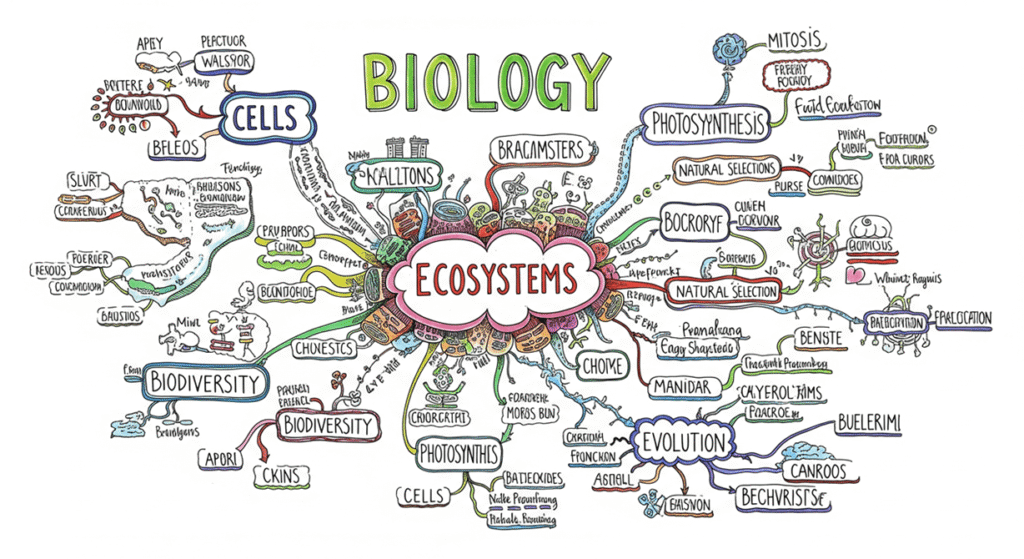
How to create a mind map:
- Start with the main topic in the center
- Add branches for subtopics
- Use keywords, colors, and arrows to link ideas
Tools like MindMeister or even pen and paper work well for creating effective mind maps.
7. Optimize Your Study Environment
Your environment influences your focus. A cluttered or noisy space can reduce productivity.
Suggestions:
- Keep your study area clean and well-lit
- Turn off unnecessary notifications
- Use noise-canceling headphones if needed
- Study at a desk rather than in bed

Your mind builds associations with your environment—keeping a designated spot for study helps develop consistency.
8. Combine and Experiment with Techniques
No one method works for every student or every subject. Combining techniques gives better results.
Example combinations:
- Active Recall + Spaced Repetition for vocabulary-heavy subjects
- Feynman Technique + Mind Mapping for concept-based topics
- Pomodoro + Practice Problems for math and science
Track your results weekly to see which combinations help you learn best.
Helpful Tools and Resources
- Anki – Free flashcard app using Spaced Repetition
- Quizlet – Pre-made flashcard sets for most subjects
- Forest – Stay focused by growing virtual trees
- Notion – Organize notes and track study goals
- MindMeister – Create digital mind maps
FAQ: Study Techniques for Students
What are the most effective study techniques for students?
Techniques like Pomodoro, Active Recall, Spaced Repetition, the Feynman Technique, and Mind Mapping are among the most effective. These help improve focus, retention, and understanding.
How can I improve memory retention while studying?
Use Active Recall and review material using Spaced Repetition. Teaching others and using visual aids like mind maps can also improve retention.
Which apps are best for flashcards and revision?
Anki, Quizlet, and Brainscape are excellent for flashcard-based learning. They use Spaced Repetition and allow customization for different subjects.
What is the Pomodoro Technique?
The Pomodoro Technique involves studying for 25 minutes followed by a 5-minute break. It’s designed to maintain concentration and prevent fatigue during long study sessions.
Can I use multiple study techniques together?
Yes, combining techniques often works best. For example, use Pomodoro with Active Recall for math, or Spaced Repetition with Mind Mapping for theory-based subjects.
Conclusion: Start Small, Stay Consistent
Academic success doesn’t depend on how many hours you study — it depends on how effectively you study. Implementing these proven study techniques and methods will help you stay organized, remember more, and perform better.
Start by choosing one or two techniques and apply them for a week. Measure your progress, adjust your routine, and gradually build a personalized study system.
Need more guides like this? Subscribe to StudySays.org for weekly articles and resources tailored for students.